Nature

Devon Whitebeam
Growing only in Devon, Cornwall, Somerset, and Ireland.
Devon Whitebeam
Growing only in Devon, Cornwall, Somerset, and Ireland.
Devon Whitebeam
Growing only in Devon, Cornwall, Somerset, and Ireland.
A true special species, it can reproduce without fertilisation, creating seeds that are genetic copies of itself. This has resulted in pockets of clone trees that are found nowhere else in the world.
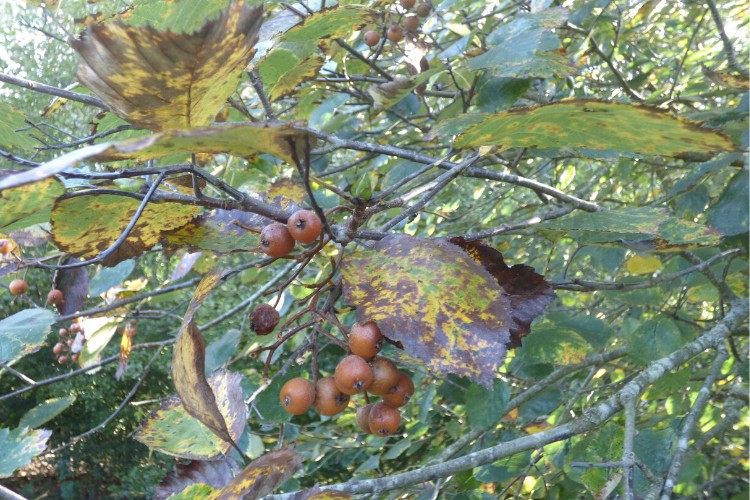
Presumed a hybrid between the wild service and common whitebeam trees, its leaves are oval with serrated edges and fine white hairs on the underside (hence ‘white’ beam). Clusters of white flowers appear in May, nourishing bees, butterflies, and other pollinating insects before ripening to brown-orange berries in autumn.
Historically, the edible fruit was sold at Devon markets as ‘Otmast’ or Sorb Apples, but today it is more a favourite of hungry birds.
Why are they in trouble?
Mainly found growing in hedgerows, or occasionally on the edges of woodland, the main threat to the Devon whitebeam is the disappearance of the habitat it depends on.
Existing only in small, concentrated populations – apart from individual trees perhaps scattered by birds – means they are particularly vulnerable to any loss of hedgerows or wooded areas.
Consequently, a lack of awareness of the species (including their locations and habitat requirements) is also a risk, with the potential for accidental removal during woodland or hedgerow management by landowners.
How will we help this special species?
We’ll be working to raise local awareness of the Devon whitebeam (DW), giving advice how to recognise them, their habitat requirements and why the species is so biologically important.
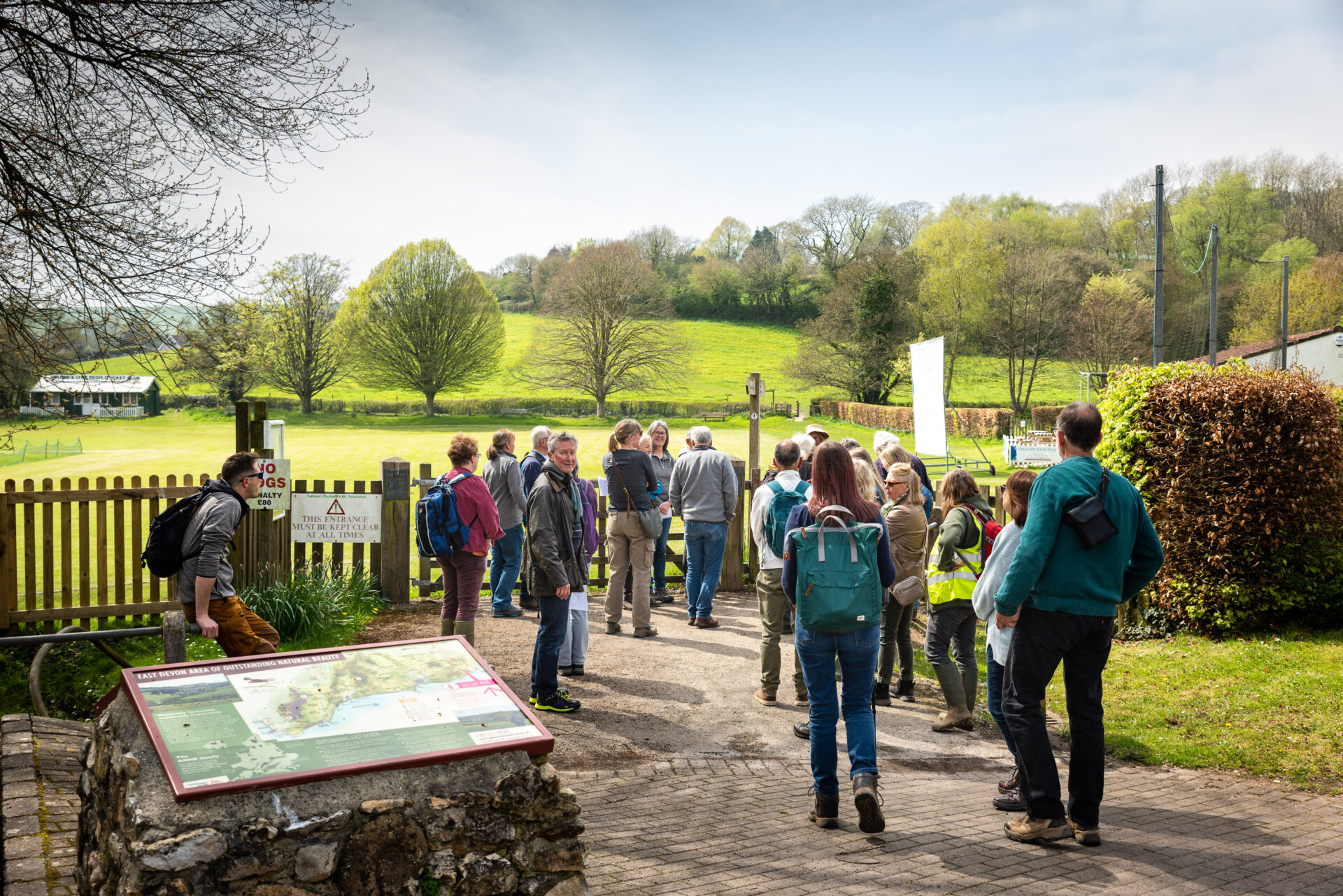
With help from volunteers and local communities, we’ll use seasonal woodland walks, citizen science surveys and other activities to help us determine if there are other examples within the National Landscape and better understand our local DW population.
Where trees are identified we’ll promote sensitive hedgerow and habitat management amongst landowners and managers.
We’ll also encourage and support the planting of Devon whitebeam in public places to raise public awareness and increase the population of the species.